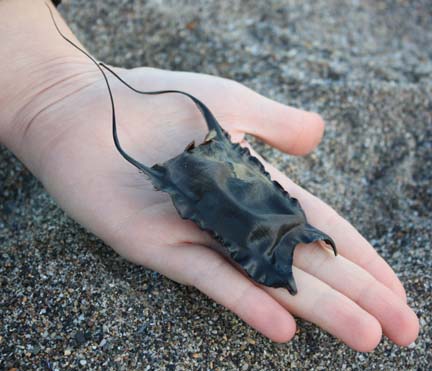
Ever spotted a strange pod on the beach and wondered what it was? It might be a mermaid’s purse – the eggcase of a shark or skate!
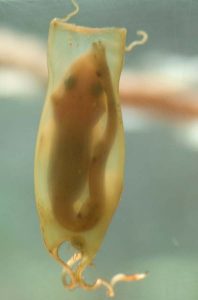
Around 40% of species of sharks and their relatives lay eggs rather than giving birth to live young. These eggs are enclosed in a tough protective capsule known as a mermaid’s purse. Mermaids’ purses are laid by adult females and anchored to the seabed or attached to seaweed, where the embryo develops (sometimes for over a year) before hatching. The baby shark or skate then hatches out of the purse and swims away, leaving the discarded eggcase behind, often to be washed ashore by the tide and found on the shoreline by beachcombers.
Every mermaid’s purse you find could help marine conservation. By recording sightings, our scientists can help to identify important nursery areas for sharks and skates, helping to protect vulnerable species and inform marine management.
What does a mermaid’s purse look like?
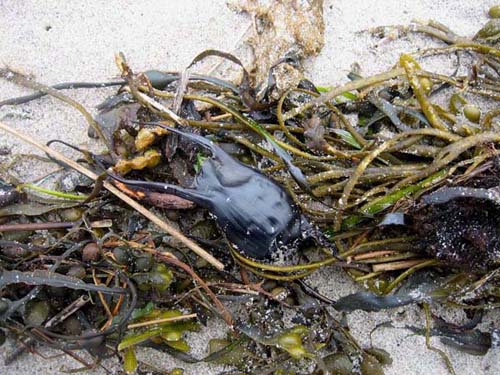
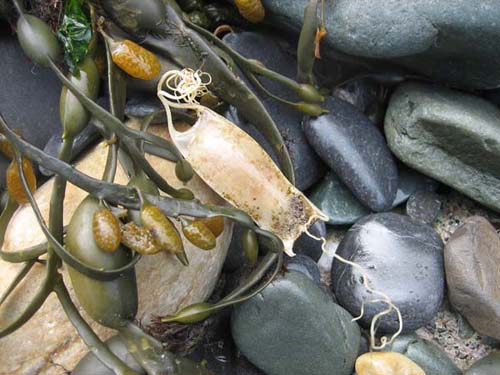
Mermaids’ purses are often mistaken for seaweed on the seashore as the small black or brown pods can look like the air bladder of some common brown seaweeds. Take a closer look, however, and you’ll notice distinctive horns or curly tendrils at either end of the eggcase. These features help us to determine which species laid the egg.
Square or rectangular eggcases with pointed horns are usually laid by skates (image below). The horns help anchor the egg case to sand, mud, or gravel of the seabed while the embryo develops.
Longer, more tubular eggcases with curly tendrils are laid by catsharks (image below). The female wraps these tendrils around seaweed or other structures to secure the eggcase until the young shark is ready to hatch.
Many aquariums display live shark and skate eggcases, where you can see mermaids’ purses with live embryos. Check out our video of lesser spotted dogfish (also known as small-spotted catshark) embryos in Galway Atlantaquaria in the west of Ireland and see the developing sharks gently waving their tails to circulate oxygen-rich seawater through theit eggcases.
How long does a baby shark or skate stay inside a mermaid’s purse?
The developing embryo is nourished by a yolk sac while it grows safely inside the eggcase. The length of time it spends in the mermaid’s purse varies between species. Some, such as the rare and Critically Endangered White Skate, may remain inside the egg case for up to 15 months! The young shark or skate stays inside the eggcase until it is fully developed and ready to survive on its own, with no care from its parents.
How does a baby shark or skate hatch from a mermaid’s purse?
When the baby shark or skate is ready to hatch, it squeezes out through a narrow opening at one end of the egg case, between the horns or tendrils. This opening can be difficult to spot, especially if the eggcase has dried out after washing up on the beach. If you’d like to see the hatch opening more clearly, soak the eggcase in water for a few hours until it becomes soft and flexible. Then gently squeeze the sides of the eggcase between your thumb and forefinger to reveal the narrow opening where the young shark or skate came out.
Where is the best place to find a mermaid’s purse?
Mermaids’ purses are often washed up on beaches by the surf and rising tide, and you can often find them tangled up in seaweed on the strand line. Smaller eggcases can easily be blown further up the beach by the wind, sometimes as far back as the sand dunes. So if you’re searching a beach for shark and skate eggcases, take your time to carefully scan these areas – you might be surprised by how much you find!
What should I do if I find a mermaid’s purse on the beach? Will the baby still be alive inside?
Most mermaids’ purses found on the beach are empty. By the time they wash ashore, the young shark or skate has usually hatched and swum away, leaving the discarded eggcase behind. You may very rarely find a sealed eggcase containing a live embryo, especially after severe storms. This is uncommon, however, as developing embryos need a constant supply of oxygen-rich seawater flowing through the eggcase.
In the early stages of development, the eggcases remain sealed, with the embryo surviving off of the nutrients stored in its yolk sac. After some time developing inside the eggcase, most shark and skate embryos begin to rely on flushing oxygen-rich seawater through narrow openings in the eggcase using their tails or wings, which is why the baby sharks can sometimes be seen wiggling their tails inside! Because of this, stranded eggcases containing older embryos are unfortunately unlikely to survive out of the water for long.
Check out this video of a catshark embryo which was found on the seashore by our student interns after a particularly bad storm!
How can I tell if there’s a live embryo inside?
If you think you’ve found a mermaid’s purse with an embryo inside, here are a few things to look for:
- Catshark eggcases are translucent, so you can often see the developing embryo inside. If it’s alive, you may even notice it moving or gently waving its tail.
- Skate eggcases have thicker, darker walls, making the embryo much harder to see. Holding the eggcase up to a bright light may help you see whether anything is inside.
- If the embryo has died, it will usually be difficult to see clearly, as it may already have begun to decompose.
If you believe you’ve found a live embryo, carefully return the eggcase to the sea in an area that is away from the surf and below the shoreline or tidal if it is safe to do so. Always put your own safety first and follow the Seashore Code at all times when beachcombing.